






In this epoch where South cinema is perceptibly influencing Bollywood, from storytelling to scale, music has also undergone a significant transformation. With composers like Anirudh Ravichander and Thaman S creating chartbusters for Hindi films such as Jawan and Baby John, the conversation around cross-industry collaboration has emerged louder than ever.
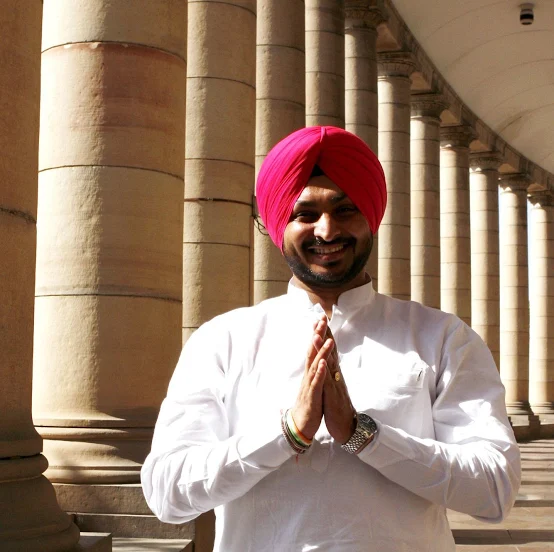
Music composer Aman Pant believes this transformation is organic and trend-driven. He opens up on the recent trend of music in the industry.
In an exclusive conversation Aman Pant, who has composed music for hits like Dunki, Jolly LLB 3 and most recently for The Family Man 3 and Single Papa, talked opened up on the trend of music in Bollywood, South composers composing in Hindi films and more.
Amidst the conversation when asked why South music composers are frequently seen working in Bollywood, while the reverse is rare,Aman explains that it largely boils down to trends and timing. Adding that a lot of South composers who are entering Bollywood are extremely talented. Anyone who has talent will automatically come forward. Right now, the trend in the film industry is that of South cinema, especially in terms of filmmaking. South is not copying anyone; they are following its original trend and that there are some South-style films being made in Bollywood, and that’s why South composers are being approached. To be honest they are very talented.” However, Aman doesn’t believe this one-way movement will last forever. He feels that it’s only a matter of time before Bollywood composers start making inroads into South cinema as well. “After a point, even Bollywood composers will compose music for South films. Maybe he will shift base go to South for composing music himself.
In fact, Aman revealed that he was once close to making his South debut and even got an offer for a Malayalam film, but somehow it didn’t work out. A lot of times, there is a language issue. Cinema works in a particular language, and music is a very important part of storytelling. He shared that understanding the language intensely matters, and maybe that holds things back.
He also shared that another reason for this might be that Bollywood composers don’t actively pursue opportunities in the South because they already have steady work in Hindi cinema. “Maybe Bollywood composers haven’t approached the South industry much because we already have good work here. But if he gets an opportunity he would certainly do it, especially in Malayalam cinema as he loves Malayalam films. The cinema and the music there are beautiful.
On the change in the definition of a hit song,
Aman shared whether the definition of a ‘hit song’ has evolved over the years and pointed out a stark contrast between the 1990s and today’s music landscape. “Music in the ’90s was very melody-oriented. Now it has turned out to be more formulaic, there’s a catchy tune, and then something that can be cut into a 30-second reel. They are seeing music as a 30-second reel. Earlier, it used to take one and a half minutes just for a song to begin properly. There would be beautiful music, and then they would arrive at the song.
While composers are still capable of creating rich, layered music, Aman shared that he feels the audience’s patience has significantly reduced. “Composers can create that kind of music, but the audience doesn’t have that level of patience anymore. A lot of non-filmy music on Spotify is doing very well in India. People are listening to different artists. Take Talwinder, for example; he has emerged as a sensation purely through his own songs. People don’t want to listen to four- or five-minute songs anymore. That audience has become very niche, but maybe after four or five years, we might go back to the trend of melodies.
News Edit KV Raman