








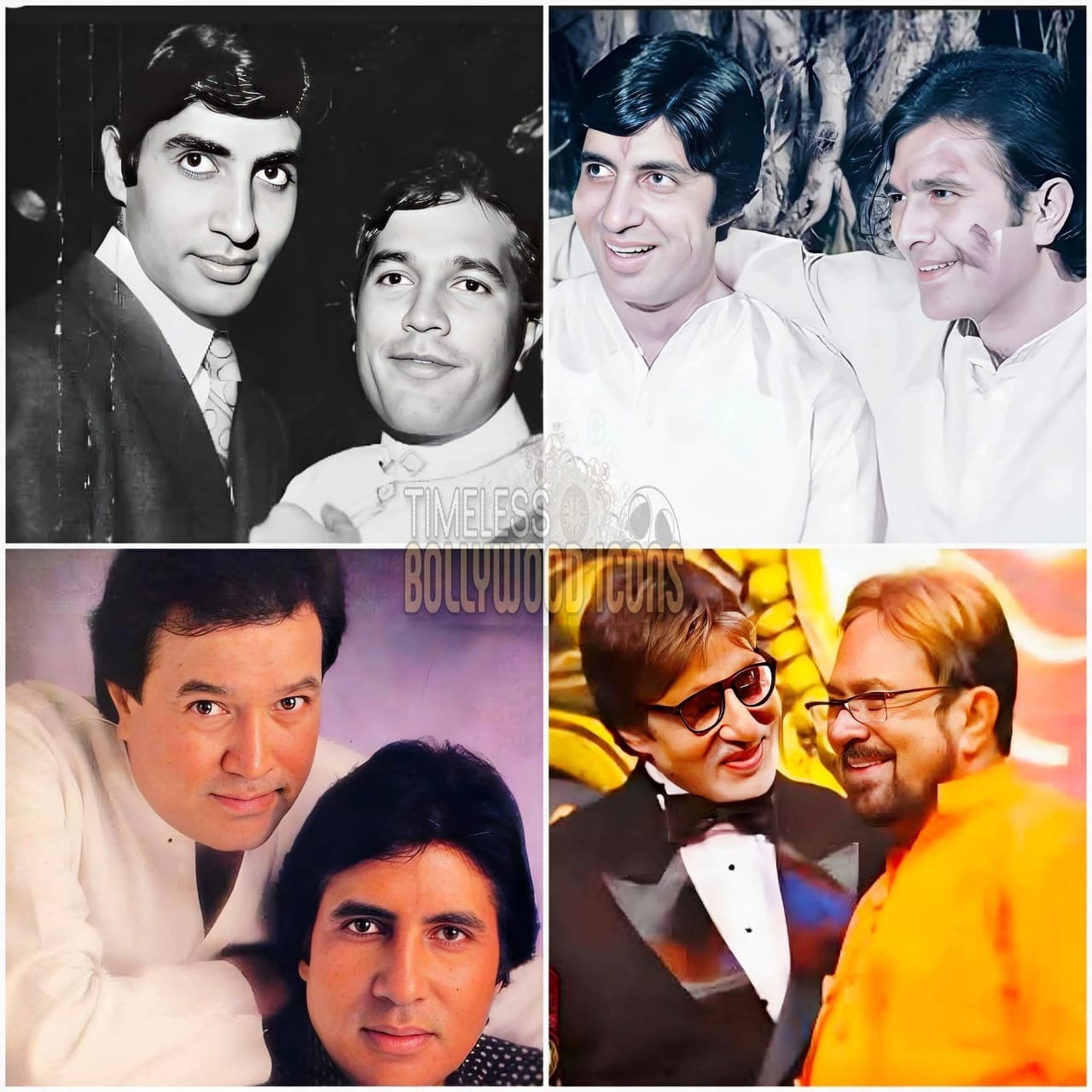
Inarguably Rajesh Khanna defined “Superstardom” with his crinkling eyes and romantic tilt of the head, and dominated the silver screen solo. However, by the early 1970s, a glowering shadow to elongate over his throne and that shadow undoubtedly belonged to Amitabh Bachchan.The contention amid these two legends wasn’t merely over box office numbers; but, a transformation in the soul of Indian cinema. Although Rajesh Khanna was the “King of Romance,” Bachchan emerged as the “Angry Young Man.” Their friction reached a boiling point amidst the shoot of Hrishikesh Mukherjee’s directorial Namak Haraam released in 1973.
The most legendary “battle” amid them
wasn’t physical, but psychological. Legend has it that amidst Namak Haraam, Rajesh Khanna realizing the audience’s sympathy always lies with the character who dies
insisted that his character, Somu, be the one to perish at the end. Reportedly he put pressure on the director to modify the script so he could secure the “heroic”exit. At that time around Amitabh Bachchan, who was only told on the change on the day of the shoot, felt betrayed. However, the irony of fate was cruel: even though Rajesh Khanna got the death scene, it was Amitabh’s intense performance that captured the nation’s imagination. Rajesh Khanna famously remarked after seeing the rushes, “his era is over”.
The Professional Rift: Rajesh Khanna often accused Amitabh of “playing dirty politics” with directors,Years later, he admitted to feeling envious after watching Amitabh Bachchan in Yash Chopra directorial Deewar, a role originally intended for him. Khanna’s legendary arrogance clashed with Bachchan’s disciplined, “angry” persona. And this rivalry marked the sunset of the romantic hero and the dawn of the action era. It remains a masterclass in how stardom is earned, defended, and eventually passed on.
News Edit KV Raman