











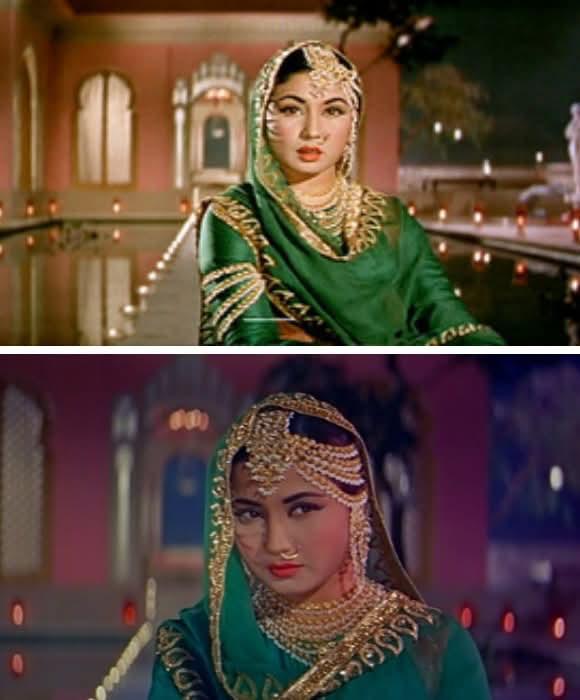
Legendary filmmaker Kamal Amrohi’s cinematic directorial Pakeezah released in 1972 is masterpiece that truly transcended borders, largely due to its cult status as a “Muslim Social” genre film, its opulent depiction of North Indian/Lucknowi culture, and the poignant, real-life story of its star, Meena Kumari.
“Pakeezah” resonated intensely in Pakistan and among South Asian audiences worldwide, as it captured the lost era of Urdu poetry, thumris, and Nawabi etiquette (tehzeeb) that was shared across borders.
The film turned out to be one of the first Hindi films to break cultural barriers, often shown to appreciative audiences outside the mainstream Bollywood demographi
Released just weeks before Meena Kumari’s death, the film emerged as an emotional “memorial” to her, adding a layer of tragic romance that fans globally embra
The music, composed by Ghulam Mohammed and Naushad, with songs like “Chalte Chalte” and “Inhi Logon Ne,” is recognized for its artistic qualit
The film took 14 years to complete (1958–1972), evolving from black-and-white to color, and reflected a slower, more graceful era of filmmaking.
Meena Kumari’s portrayal of Sahibjaan is considered her crowning achievement, providing a poignant testament to her talent, often reflecting her own life’s pain.
Written, produced, and directed by Kamal Amrohi, the film is a testament to his dedication to crafting a perfect “pure” (Pakeezah) cinematic experience.
Pakeezah remains a landmark in cinema, remembered not just as a film but as an experience of unmatched poetic beauty.
News Edit KV Raman