




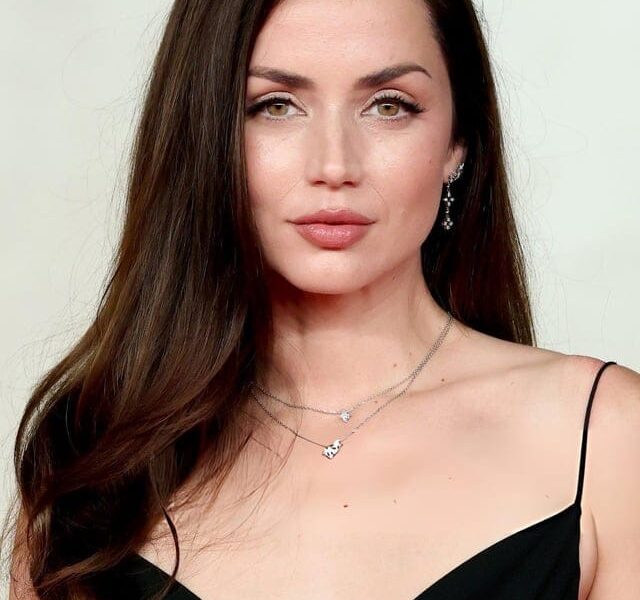
Hollywood star Ana de Armas recalls her arrival in Saudi
Hollywood icon Ana de Armas recalled her arrival in Saudi Arabia’s Jeddah to attend the 5th Edition of the Red Sea Film Festival.
For Ana, Saudi Arabia reminded her of Cuba home. This she revealed before any talk of awards or franchises begins.
She went on to add that the people are so warm, welcoming and above all incredible. There’s something familiar the kindness, the energy. It feels like home in a way she never anticipated.
For the Cuban-born actress Ana de Armas the fifth edition of the Red Sea Film Festival in Jeddah on December 5, 2025 was a fitting starting point for a conversation that quickly emerges about identity, belonging, grit, and the long, winding road that brought her from a small town outside Havana to some of Hollywood’s biggest stages.
From Havana to Hollywood – she always wanted to perform”
Ana’s childhood in Cuba was vibrant, noisy, and filled with imagination.
She had a very happy and free childhood.
They were always outside, performing for the neighbours. She was in a Spice Girls dance group — always trying to entertain people.”And even before she understood what drama school was, she knew she wanted to act. Films became her teachers; actors on screen became her references.
She eventually auditioned for Cuba’s National Theatre School, earning a spot in its four-year programme. But in her second year, she did something bold: she auditioned for her first film — even though students weren’t allowed to work.
She got the role.
Actress Ana de Armas in ‘Blonde’.
“They let me take a year off to film. It was dreamy — working with Cuba’s biggest actor. But when she returned to school, all her classmates were a year ahead. It was tough. Still, she knew she belonged on set.
On days she wasn’t filming, she would shadow the director, sit with the sound mixer, watch every department work.
She learned more by doing than anything else.”
At 18, she moved to Madrid with only 300 euros saved from her Cuban films. Slept on a friend’s couch for months,” she admits. But luck struck early. A casting director she’d met in Cuba called her in, and she landed a role in a TV series that ran for years.
The downside? She was cast as a schoolgirl — and the industry couldn’t see beyond that.
She was stuck playing teenagers and wanted film roles, serious roles, but she couldn’t break out. Isgdove Spanish cinema and its directors, and I wish I had more opportunities there.”
That frustration planted the seeds for yet another leap.
A leap of faith: “I sold everything and moved to L.A.”
A Venezuelan director casting a film about a Cuban boxer brought her to L.A. for an audition. When she returned to Spain afterward, she felt something shift.
“I sold all my furniture, gave up my apartment, packed three suitcases and my dog, and moved to L.A. I didn’t speak English. Zero. My first months were just language school.”
No one in Hollywood knew who she was. No one cared about her Spanish or Cuban work.
“It was humbling. People weren’t patient. I had to start from scratch. But when I commit to something, I go all in.”
Struggling to be understood: “I memorised lines phonetically”
Her early U.S. roles required her to speak English she didn’t fully understand.
“With Knock Knock, my accent was terrible. I memorised lines phonetically. It was frustrating because I’m a very free actor — I love improvising — and suddenly I was trapped repeating sounds.”
Still, she pushed forward.
The turning point: Blade Runner 2049
Everything changed when Denis Villeneuve cast her in Blade Runner 2049.
“That felt different — the scale, the director, the character. And it wasn’t just a phone call. It was three auditions. It made her feel like she earned it.”
The film put her on the Hollywood map.
Blade Runner 2049
And then came the role that pushed her further than anything else she’d done: Blonde.
Fighting for Marilyn: “Not everyone wanted me”
The casting process for Blonde was intense.
She auditioned, and Andrew took the tape to the producers. They had Plan B on one side and Netflix on the other. Not everyone supported her casting. And she kind of get it — a Cuban actress playing Marilyn Monroe is a strange thought for some.
She only had one week to prepare her initial tape — a week she devoted entirely to emotional truth.
Her accent was a disaster. She didn’t do any dialect work. She focused on getting to her emotionally because to her that is the character. Sound and voice are different things.”
Director Andrew Dominik fought relentlessly for her.
This image released by Netflix shows Adrien Brody, left, and Ana de Armas in “Blonde.”
“He wouldn’t do the movie with anyone else. He’d been attached for ten years, saying no to other ideas.”
Ana was given nine months of full immersion to transform.
“Andrew is very specific — every line, every frame had to match his vision. Many scenes were replicas of real photographs, so we studied every detail.”
The result was the most challenging performance of her lifeand the one that brought an avalanche of recognition.
The awards whirlwind: “Moving, overwhelming… and a little lonely”
“The SAG Award, the BAFTA, the Golden Globes, the Oscar — almost all of them,” she says, still sounding surprised.
“It was moving. Very special. She wasn’t expecting it.”
All the nominations arrived while she was filming Ballerina.
“Every few days someone would scream on set — which is funny when you’re surrounded by weapons! It was chaotic and beautiful.”
But the experience was bittersweet.
She didn’t think she should be the only one recognized. Andrew deserved it. Hair and makeup, wardrobe — we had over 100 costume changes. So many people should’ve been there with her”
Awards season emerged emotionally complicated.
She was happy, but it felt lonely and was the only one representing the film, answering all the hard questions, carrying the controversy alone.”
Still, she soaked in the moment.
“When is something like that going to happen again? Maybe never. Maybe that was my one chance to be in a room with those actors she admires so much.
Her campaign was almost nonexistent because she was shooting in Prague.
She missed all the luncheons, all the round tables. She just flew in for the awards and went straight back to set.”
Joining the James Bond universe: “It changed everything”
Ana credits her earlier cameo in the franchise No Time To Die’s Paloma as a turning point.
“That character, even though the role was small, was big. People loved her. At the Royal Opera House premiere, when she hands Bond the cigar and says goodbye, the entire hall stood up in the middle of the movie. A standing ovation. She will never forget that.”
Ana de Armas in No Time to Die
That moment made her realise the scale and emotional reach of the franchise — and prepared her for Ballerina.
Full immersion into action: “Brutal, beautiful, transformative”
Ballerina required months of physically punishing prep.
“The training was brutal months before shooting and then nonstop on set. No time to rehearse. Some action was created on the spot. It was a before-and-after moment for me as a person and as an actor.”
For someone who never saw herself as an action performer, this franchise changed her entirely.
Looking forward — and looking home
Despite her global success, Ana remains deeply connected to Cuba, Spain, and now — unexpectedly — Saudi Arabia.
“There’s a warmth here that reminds me of Cuba,” she says again, softly. “It feels like people understand you, even without words.”
Ana de Armas may be a global star, but at her core, she is still the girl who performed in the streets of Havana, chasing something she felt long before she could name it.
Also In This Package
Kriti Sanon steals the spotlight in Jeddah
Diary from starry Red Sea Film Festival opening night
Red Sea Festival diary: Stars, scramble & crazy moments
Red Sea Festival opens with star power and emotion
News Edit KV Raman