






Mumbai is set to
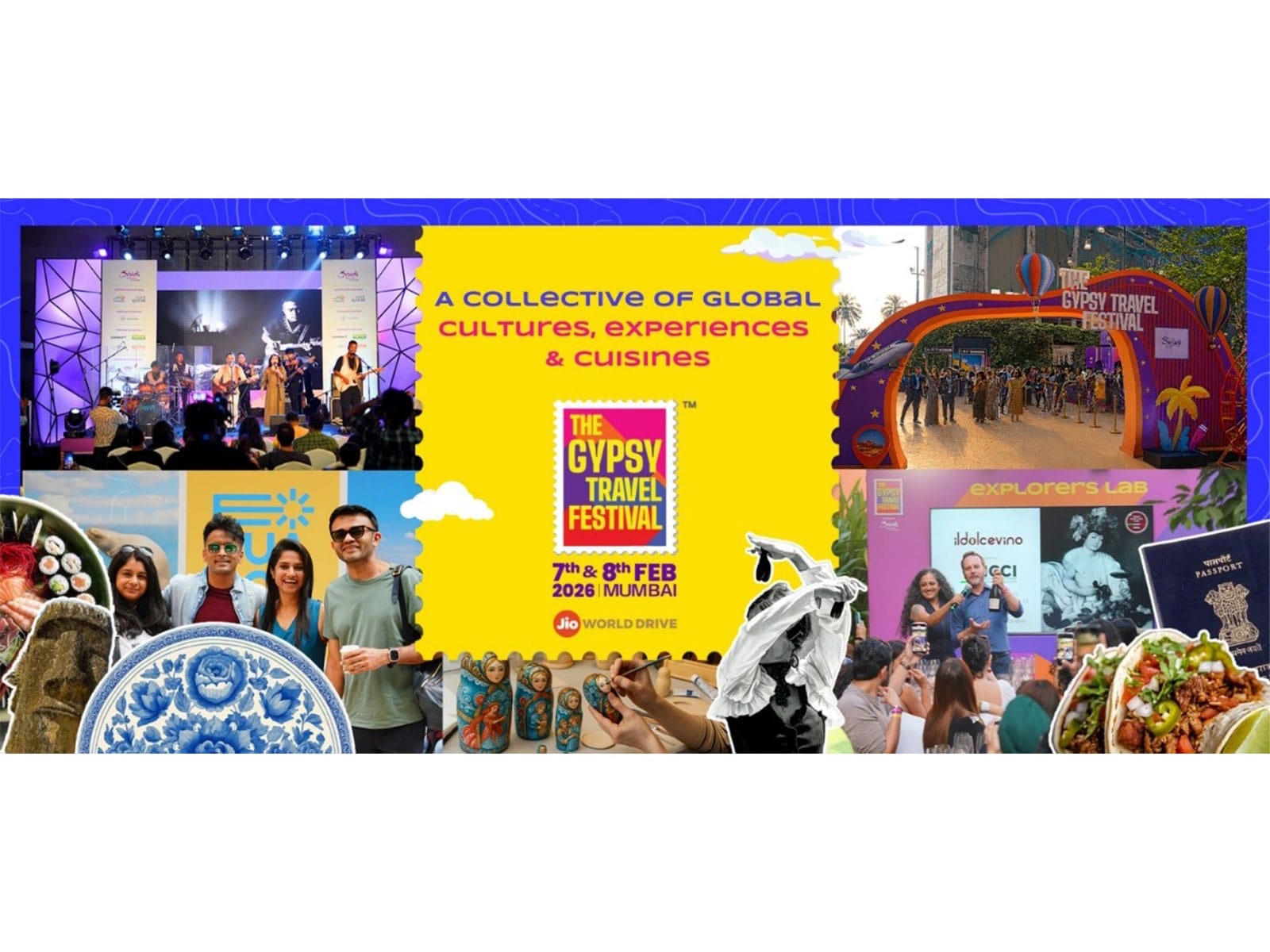
emerge as a global tourism hub with the return of the Gypsy Travel Festival. This marks its confident return with its most ambitious edition.
The festival envisioned for February 7-8 at Jio World Drive, BKC, will run from 3 pm to 10 pm each evening, transforming one of Mumbai’s most lively spaces into a buzzing crossroads of destinations, cultures, conversations and ideas.
Elaborating on the philosophy behind the festival, Lubaina Sheerazi, Co-founder of The Gypsy Travel Network, explains that TGTF was envisioned as a space where travel conversations could become more human and intentional. Over the years, Indian travellers have evolved, becoming more curious, informed and experience-driven. This edition, she says, mirrors that evolution by spotlighting destinations and brands that offer depth, authenticity and meaningful engagement before the journey even begins.
“What we consistently observe is a shift from passive interest to informed intent. At conventional travel expos, engagement is often limited to collecting material or short transactional interactions. At TGTF, visitors spend time, sometimes hours, listening to panellists, engaging with speakers, and asking detailed, practical questions about destinations. Several destinations have shared that travellers who first encountered them at the festival returned later with a far clearer understanding of local culture, seasons, food, and travel logistics. These were not impulse decisions, but considered ones. In that sense, the festival changes the quality of attention a destination receives. TGTF works because it provides context. When people hear first-person narratives from photographers, chefs, writers, or locals, the destination is no longer abstract. It becomes familiar and human. That familiarity directly influences how people travel later: with more awareness, preparation, and respect,” she told Outlook Traveller.
One of the defining features of TGTF 2026 is its strong focus on destination-led storytelling. As India’s appetite for immersive travel continues to grow, the festival brings the world to Mumbai through curated showcases that highlight culture, cuisine, landscapes and local narratives.
Among the standout participants this year is Amazing Thailand which will spotlight everything from culture-rich cities and island escapes to wellness journeys, festivals and emerging sustainable routes. Visit Sapporo will offer a glimpse into Japan’s northern island of Hokkaido, showcasing snow-covered landscapes, world-class produce, hot springs and seasonal adventures that redefine experiential travel.
Magical Kenya will present a broader narrative of the country, moving beyond iconic safaris to reveal its vibrant coastline, dynamic cities and diverse experiences that continue to feature on global bucket lists.
Noboribetsu Date Jidaimura old architecture Edo Historic Village Hokkaido, Japan.
Inquiring about how Lubaina balances a culture-led festival without flattening or commodifying local narratives, she says that the balance is central to how the festival is designed.
In destination branding, especially at a national level, the risk is always oversimplification. My work with tourism boards has always focused on long-term narrative-building rather than short-term image-making, and TGTF follows the same approach. They are careful about who speaks for a destination.
Instead of marketing representatives alone, people whose work is rooted in lived experience, like artists, chefs, cultural practitioners, photographers, and travellers who have spent time engaging intensely with the place, are invited. They also resist framing destinations through a single lens, whether that’s luxury, adventure, or wellness. A place is allowed to be layered and even contradictory. That complexity is not a weakness it’s what prevents cultural storytelling from turning into cultural consumption.
Alongside destination showcases, TGTF 2026 brings together a carefully curated mix of lifestyle and hospitality partners. Adding another layer to the festival are its culinary offerings and conversations, with global flavours, local favourites and fireside chats featuring voices from the food world that audiences trust and admire.
Chef Vicky Ratnani and street food authority Rocky Singh will be part of conversations that explore food as an essential lens through which travel is experienced and remembered.
Attendees can engage with travel talks led by industry insiders and seasoned travellers, participate in hands-on workshops on itinerary planning and smart travel hacks, explore interactive installations, sample global cuisines, unlock festival-exclusive deals and connect with a community that truly understands the pull of travel.
Lubaina Sheerazi, whose journey mirrors the evolution of India’s outbound travel story, began her career in the fashion industry. After gaining significant experience working with several organisations within the travel and tourism industry, including Galileo, Air Sahara, Kuoni, and Cox & Kings, in 2010, she started Blue Square Consultants, where she developed innovative ideas that have changed the way Indian travellers think about visiting global destinations. Lubaina’s work has repositioned Oman as a desirable and exotic leisure destination by increasing the number of Indian travellers visiting there.
Additionally, Lubaina has regenerated the Seychelles image, thereby contributing to a large increase in the number of visitors from India going to the Seychelles.
Forget Seychelles if you like parties on the beach
Speaking about the need to organise a physical and large-scale festival when the travel audience has increasingly become digital-first and influencer-driven, Sheerazi says that digital platforms have democratised travel inspiration, but they’ve also created fatigue and scepticism.
She notes that “People are exposed to enormous volumes of content, yet often lack the ability to assess credibility or relevance. What’s missing is time, conversation, and context. TGTF exists to slow that process down. It creates space for dialogue—where travellers can question, challenge, and understand rather than simply consume visuals. Over the years, the festival has evolved to include structured talks, workshops, and immersive sessions because audiences today are looking for depth,” she notes.
According to her, TGTF complements digital platforms instead of competing with them. It acts as a physical reference point where online inspiration can be tested, clarified, and grounded through real interaction.
Lubaina Sheerazi in Berlin, Germany
It is important to note here that experiential travel often risks becoming elite or aspirational rather than accessible. Sheerazi feels that travel should not feel intimidating or inaccessible. “Inclusivity is not an add-on for us; it shapes our programming decisions. We’re conscious of representing a wide spectrum of journeys,” she comments.
“At TGTF, established destinations share space with emerging ones. Luxury narratives coexist with conversations around slow travel, budget travel, and community-led tourism. The emphasis is not on spending more, but on travelling with intention. We also design the festival for a diverse audience—students, first-time travellers, families, and experienced explorers. Representation matters, whether it’s who is on stage or whose stories are being told. Inclusivity, for us, means allowing multiple travel realities to exist side by side,” she reflects.
News Edit KV Raman