








It’s well-known that in mainstream Hindi cinema, performers usually command the spotlight, whereas the minds shaping the stories remain largely unseen. Screenwriters, regardless crafting narratives that power blockbusters, have historically strived for recognition. Only a handful have managed to rise beyond obscurity and emerge as influential figures in their own right.
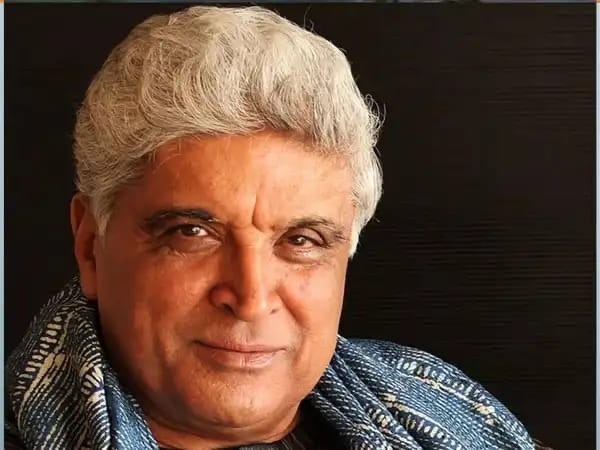
Among this rare group, is Javed Akhtar who stands tall. Alongside his creative collaborator Salim Khan, he transformed an industry where writers were once dispensable into one where their names alone could draw crowds into theatres.
The 1945, born Javed Akhtar landed in Mumbai when he was nineteen, carrying a single ambition: to work under the legendary filmmaker Guru Dutt. Destiny, however, dealt a harsh blow. Within days of Javed’s arrival, Guru Dutt departed to the ‘immortal’ world abruptly extinguishing the aspiration that had brought him to the city. What followed was not retreat, but reinvention.
Coming from an illustrious lineage, Javed was the son of celebrated Urdu poet Jan Nisar Akhtar and grew up immersed in literature and verse. Writing was not merely a skill but a natural inheritance. Still, talent alone could not guarantee survival in Mumbai. To earn a living, he began searching for work and eventually found employment with filmmaker Kamal Amrohi, the visionary behind classics like Mahal and Pakeezah, and the husband of iconic actress Meena Kumari.
For nearly a year, Javed worked under Amrohi for a meagre monthly pay of ₹50. Amidst this period, he received an offer that could have provided financial stability: a ghostwriting assignment for an established writer. Though the remuneration was attractive, following days of introspection, Javed chose self-respect over security. He understood that recognition mattered more than immediate comfort. Rejecting that offer turned out to be a defining moment in his journey.
The early years were marked by relentless hardship. With barely any money, Javed lived wherever shelter was available—sharing cramped spaces with friends, sleeping in parks, railway stations, studio compounds, corridors, and even on benches. There were days when he walked long distances across the city because he could not afford public transport. Hunger was a frequent companion, with stretches of time passing without proper meals. Yet, instead of despair, these experiences fueled his resolve. He often reflected that such struggles, if ever documented, would form the most powerful chapters of his life story.
In the documentary “Angry Young Men” the legendary script writer recalled his arrival in Mumbai in a third-class compartment, lived with some friends, slept on railways stations, parks, studio compounds, in corridors, on benches, and so on..”
Eventually, director S.M. Sagar hired him as an assistant on an action film titled Sarhadi Lootera, offering him
₹100 a month. His responsibility was to help actors practice their dialogues. Midway through the production, the film’s dialogue writer exited the project. When asked if he could step in, Javed accepted the challenge without hesitation.
That chance altered the course of his career. Javed became the film’s dialogue writer, and amidst this project, he met Salim Khan, who was acting in the movie. Though Sarhadi Lootera failed commercially, it quietly gave birth to the most influential writer partnership Indian cinema would ever witness. Success, however, was still some distance away.
After scripting a film for S.M. Sagar featuring Ashok Kumar, the duo earned Rs 5,000—a respectable sum at the time—but were denied proper acknowledgment. Disheartened by this lack of credit, they approached producer G.P. Sippy, hoping for fairer treatment and bigger opportunities.
Their breakthrough arrived with Andaz in 1971, followed swiftly by Haathi Mere Saathi and Seeta Aur Geeta. Over the next decade, they delivered a staggering run of influential films, including Yaadon Ki Baaraat, Zanjeer, Deewaar, Sholay, Don, Trishul, Dostana, Kranti, and later, Mr. India. These stories redefined mainstream cinema, introducing the era of the angry young man and elevating storytelling to unprecedented prominence.
In their early phase, recognition was still elusive. It was only with the Prakash Mehra directorial Zanjeer in released in 1973 that Salim-Javed received official credit for their work. Out of the 24 films they wrote together, 20 emerged as box-office successes. A few projects failed commercially, but even these carried strong writing at their core.
While the partnership ended in 1982 due to personal differences, their creative impact endured. Scripts they had developed earlier were later adapted into successful films, proving that their vision transcended their collaboration.
Javed Akhtar’s journey from anonymity to authorship remains a testament to perseverance, integrity, and the enduring power of words.
News Edit KV Raman