


Parle-G Factory goes for redevelopment
End of an Era
News comes to the fore that the iconic Parle-G Factory In Vile Parle is set for major redevelopment.
The historic Parle-G biscuit factory in Mumbai, which was established in 1929, is set to redevelop its oldest manufacturing facility in Vile Parle East, marking the end of an era of India’s one of the most recognisable industrial sites. The land of the Parle G factory will be converted into a large commercial complex.
Commercial buildings will replace Vile Parle’s biscuit factory.
The Maharashtra State Environment Impact Assessment Authority (SEIAA) approved environmental clearance for a proposed commercial development by Parle Products Private Limited on a total plot area of 54,438.80 sq mt (13.54 acres). That means the approval allows the partial demolition, the demolition of 21 old structures on the site. The company stopped its biscuit production in the mid of 2016.
Parle Products was established by Mohanlal Dayal Chauhan in 1929 in Vile Parle, western suburb of Mumbai. The factory, first used to manufacture candies and toffees, shifted its focus to making sweet biscuits in 1939. Parle Products, which was established in the area, was named after this location.
Even the name of the locality comes from the villages of Padle and Irle, or alternatively, from the temples of Virleshwar and Parleshwar. One thing is for sure, and that is it doesn’t matter if the biscuit survives in the market for more decades or not, but it has already created a special place in our hearts forever, which no other biscuit will ever be able to achieve.
Along with the iconic Parle-G, Parle company also offers a wide range of items, including Hide & Seek, Krackjack, and Monaco. The company also produces toffees like Kismi, melody, Grand Londonderry, Mazelo, and Eclairs. Their products also include snacks, wafers, rusks, cakes, breakfast cereals, and more.
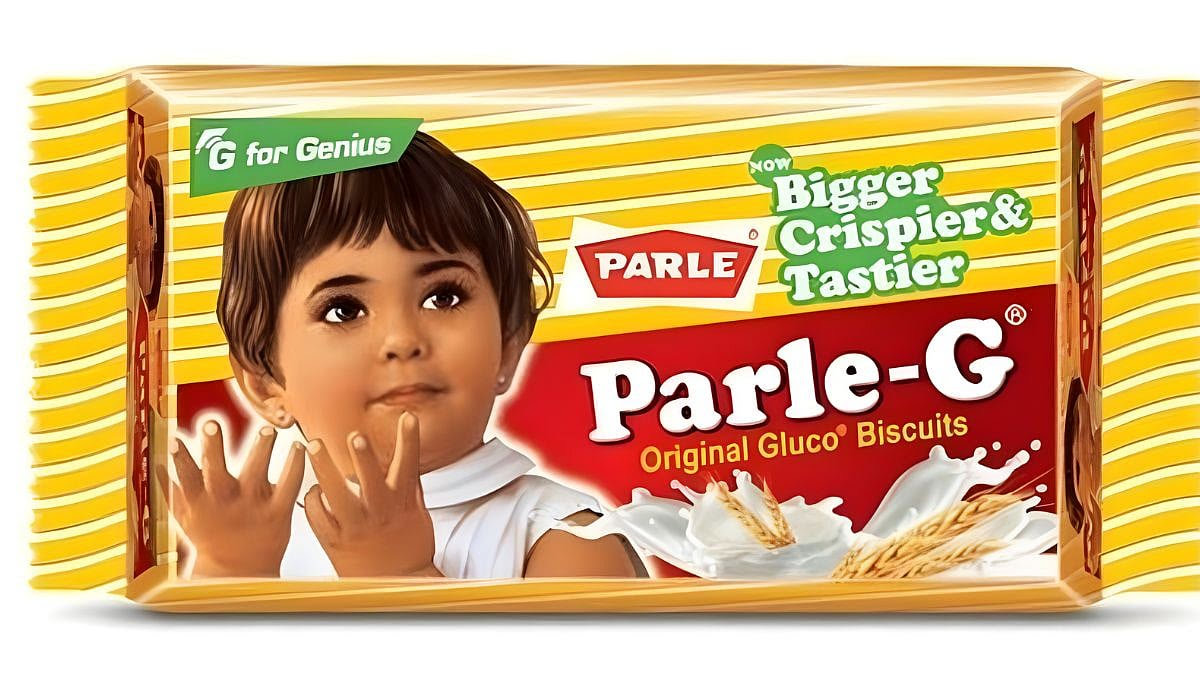
The baby girl on the Parle-G biscuit wrapper:
According to the Vice President of Parle-G Products, the kid who is featured on the wrapper of the Parle-G biscuit is not real. The picture is just an illustration that was created by artist Maganlal Dahiya for Everest Creative in the 1960s.
The design aimed to represent the innocence, purity, and connection to the family. Speculation linked the baby girl to people like Sudha Murthy, Neeru Deshpande, and Gunjan Gundania. The ambiguity and mystery behind her identity generated curiosity among people, which also kept the brand in the conversation for decades, marking an iconic marketing strategy that eventually led to the success and kept the goodwill alive in the market.
News Edit KV Raman