




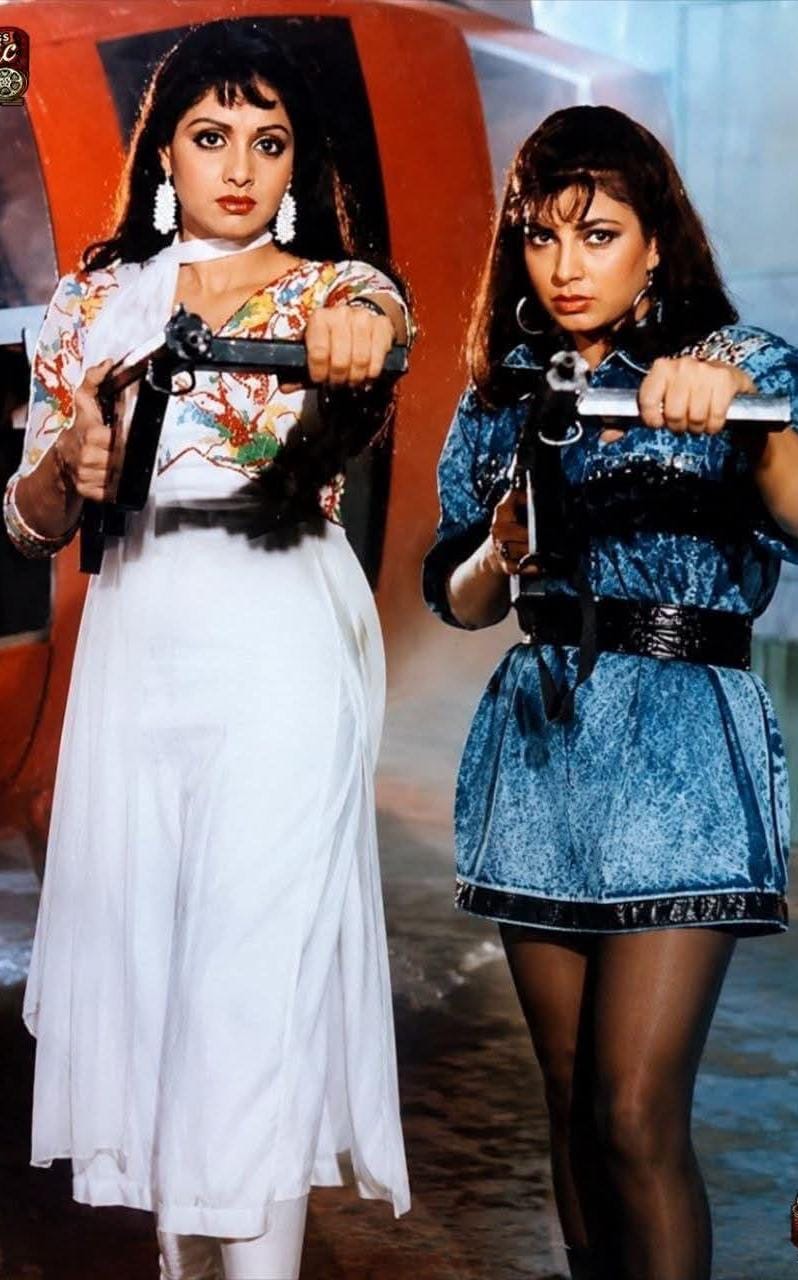
The Hindi cinema in 1980s is often remembered as a chaotic twilight zone an era of loud action, synthesized beats, and transitioning tropes. Yet, beneath the commercial frenzy lay an incredibly fluid space for female stardom. It was a decade that refused to box women into singular archetypes, proving it had room to celebrate polar opposites of screen presence. This artistic duality was never more beautifully embodied than by two reigning forces of the era: Sridevi and Kimi Katkar.
*Sridevi:
To watch Sridevi on screen was to witness a masterclass in calculated genius. She was silk draped over steel. Even in the most outlandish commercial setups, her artistic control was absolute. With an uncanny ability to switch from high-stakes drama to Chaplin-esque physical comedy, she commanded the lens like a director’s dream.
Every glance she offered carried a layer of mischief, wrapped tightly in an aura of deep mystery. She didn’t just act; she orchestrated the emotional current of the scene. Her performance style felt like a finely crafted classical sitar recital—every note was deliberate, every micro-expression was tuned to perfection, and the crescendo was always breathtakingly precise.
*Kimi Katkar:
If Sridevi was a structured symphony, Kimi Katkar was a lightning bolt that shattered the rhythm. Kimi was a firecracker dropped directly into the frame—bold, fiercely uninhibited, and gloriously unpredictable. At a time when actresses were often expected to project a demure, passive vulnerability, Kimi claimed her domain with a roaring, magnetic confidence.
She possessed a rare, untamed energy that disrupted the traditional gaze. Kimi never apologised for her sensuality, nor did she say sorry for taking up space in male-dominated action blockbusters. Her screen presence was the cinematic equivalent of a live, roaring rock concert—it was raw, electrifying, heavy on the bass, and completely unbothered by conventional rules.
What makes this parallel truly remarkable is that they occupied the exact same industry at the exact same moment in time. They offered audiences two completely different definitions of power, allure, and femininity. One drew you into her world with an enigmatic whisper; the other demanded your attention with an unforgettable shout.
Hindi cinema thrived amidst this chaotic golden age precisely because it never forced its queens to conform. It recognized that a sitar and an electric guitar don’t need to play the same tune to be brilliant. By celebrating both the precise craftsman and the untamed rebel, the silver screen became infinitely richer, leaving behind a legacy of stardom that has never been replicated.
News Edit KV Raman