








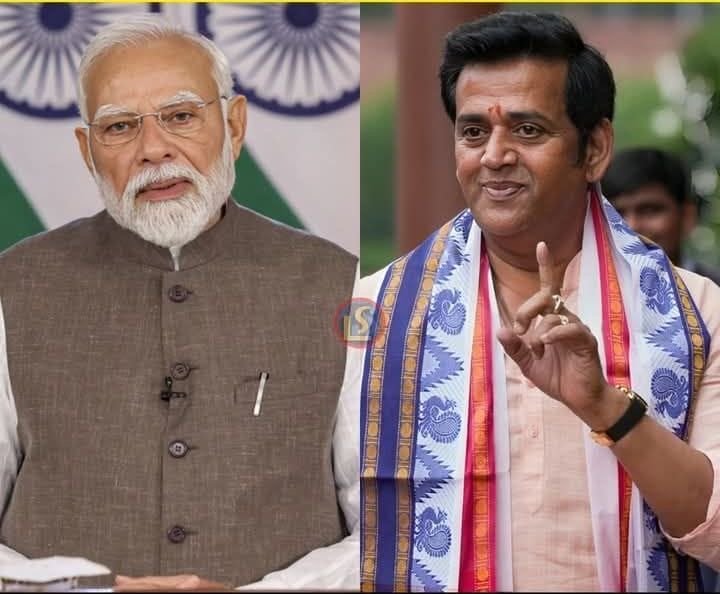
A major national debate on leadership, faith, and political discourse has re-emerged following remarks by actor-turned-politician Ravi Kishan who described Prime Minister Modi as a leader “sent by God” to guide India.
Kishan’s high praise centered on India’s rapid structural development, its elevated global profile and a renewed state focus on cultural heritage amidst the Prime Minister’s tenure.
While the comment resonated deeply with supporters, it has drawn sharp critiques from political opponents and civic observers, highlighting a fundamental ideological divide in contemporary Indian politics.
Supporters view Kishan’s statement as an authentic, emotional expression of admiration. For many, the phrase reflects a genuine belief that the administration’s policies have successfully bridged the gap between rapid economic modernization and the revival of India’s civilizational roots.
Conversely, critics argue that such divine comparisons are misplaced in a constitutional democracy. They contend that political leaders must be evaluated strictly on tangible metrics such as economic policies, institutional performance, and direct accountability to the electorate rather than personal veneration.
The ongoing discussion underscores a broader, evolving dialogue within the nation regarding the intersection of faith, governance, and personality-driven politics.
News Edit KV Raman