








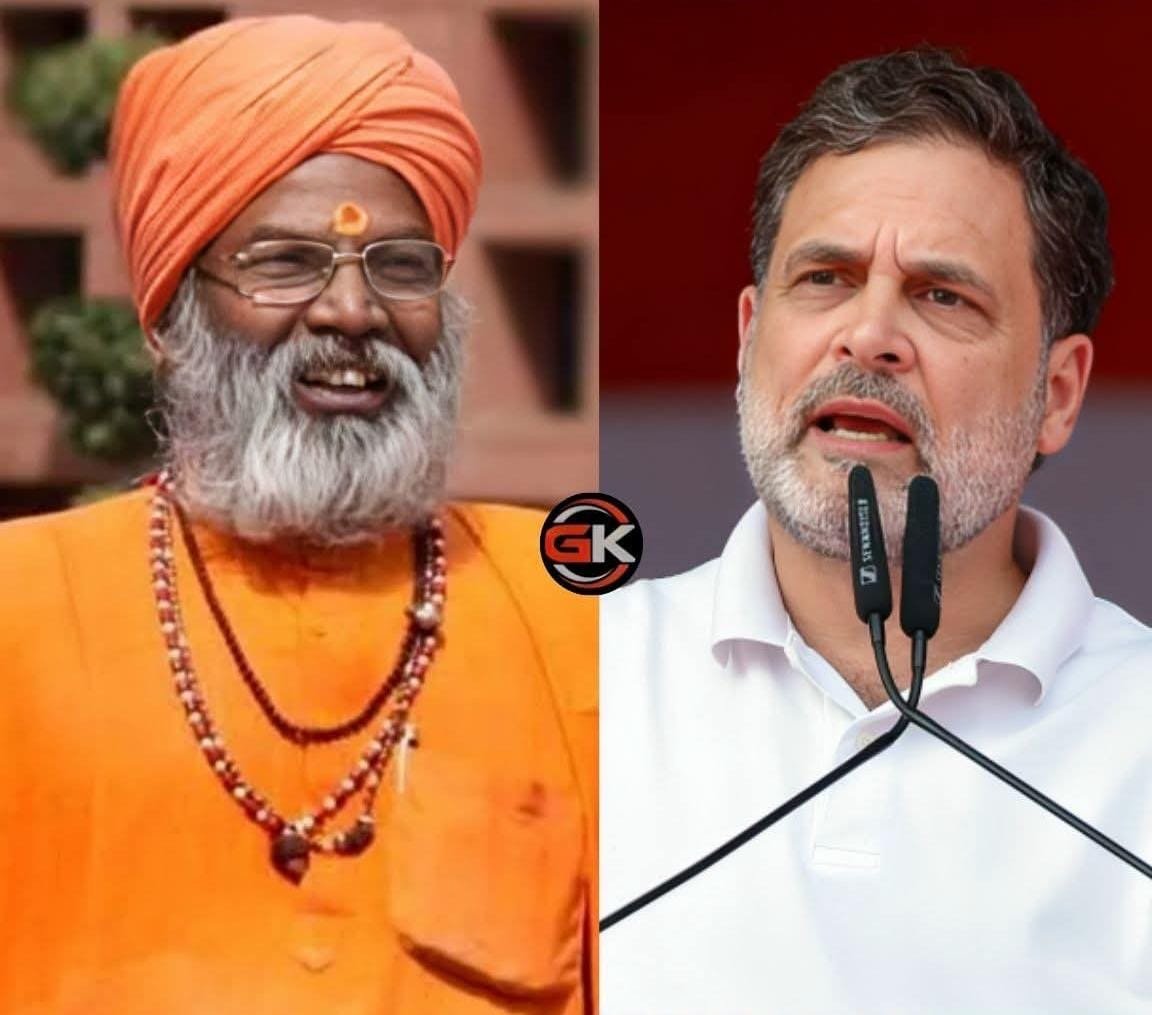
An expanded national debate has emerged surrounding the fundamental definitions of national identity, citizenship, and public service. The controversy follows a highly charged statement attributed to Bharatiya Janata Party (BJP) Member of Parliament Sakshi Maharaj targeting Opposition Leader Rahul Gandhi. While addressing members of the media, the Unnao MP reportedly asserted that a child born to a foreign woman can never be a patriot, adding that the governance of the nation should not be entrusted to such individuals.
Although the statement did not explicitly name Rahul Gandhi, political analysts and public observers have widely interpreted the remarks as a direct reference to his maternal lineage. Rahul Gandhi’s mother, former Congress President Sonia Gandhi, was born in Italy and later acquired legal Indian citizenship. In response to the circulating reports, civil society organizations, legal experts, and constitutional scholars have cautioned against using family heritage as a metric for national loyalty, urging a return to fact-based policy discussions.
Under the legal framework of the Ministry of Home Affairs (MHA), which serves as the sole authority managing Indian nationality, citizenship is explicitly defined by established statutory provisions. India’s constitutional structure governed firmly by the Citizenship Act 1955 recognizes individual rights and responsibilities independent of an ancestor’s place of birth. Legal experts note that the framework leaves zero room for ambiguity: citizenship status is determined strictly through formal registration, birth, or legal naturalization, rather than public speculation or heritage.
Furthermore, official records maintain that Rahul Gandhi is an Indian citizen by birth. He has served multiple terms as an elected Member of Parliament, swearing allegiance to the Indian Constitution with each tenure. Demands to filter public service eligibility based on maternal lineage contradict the basic democratic principles enshrined in the nation’s founding documents.
Political commentators emphasize that robust democratic debate relies on challenging political adversaries over real-world performance metrics. Political parties have every right to critique their opponents on governance models, economic plans, legislative records, and development strategies. However, introducing personal attacks based on a leader’s family background risks establishing an exclusionary precedent in a highly diverse country.
The controversy has sparked a wider conversation on whether patriotism should be evaluated as an inherited trait or an active commitment. Critics argue that true love for the country is demonstrated continuously through administrative accountability, civic responsibility, and adherence to democratic values, rather than geographic fortuity.
Shifting the political focus back toward public welfare, job creation, and infrastructure development remains critical to addressing the concerns of ordinary citizens.
News Edit KV Raman