




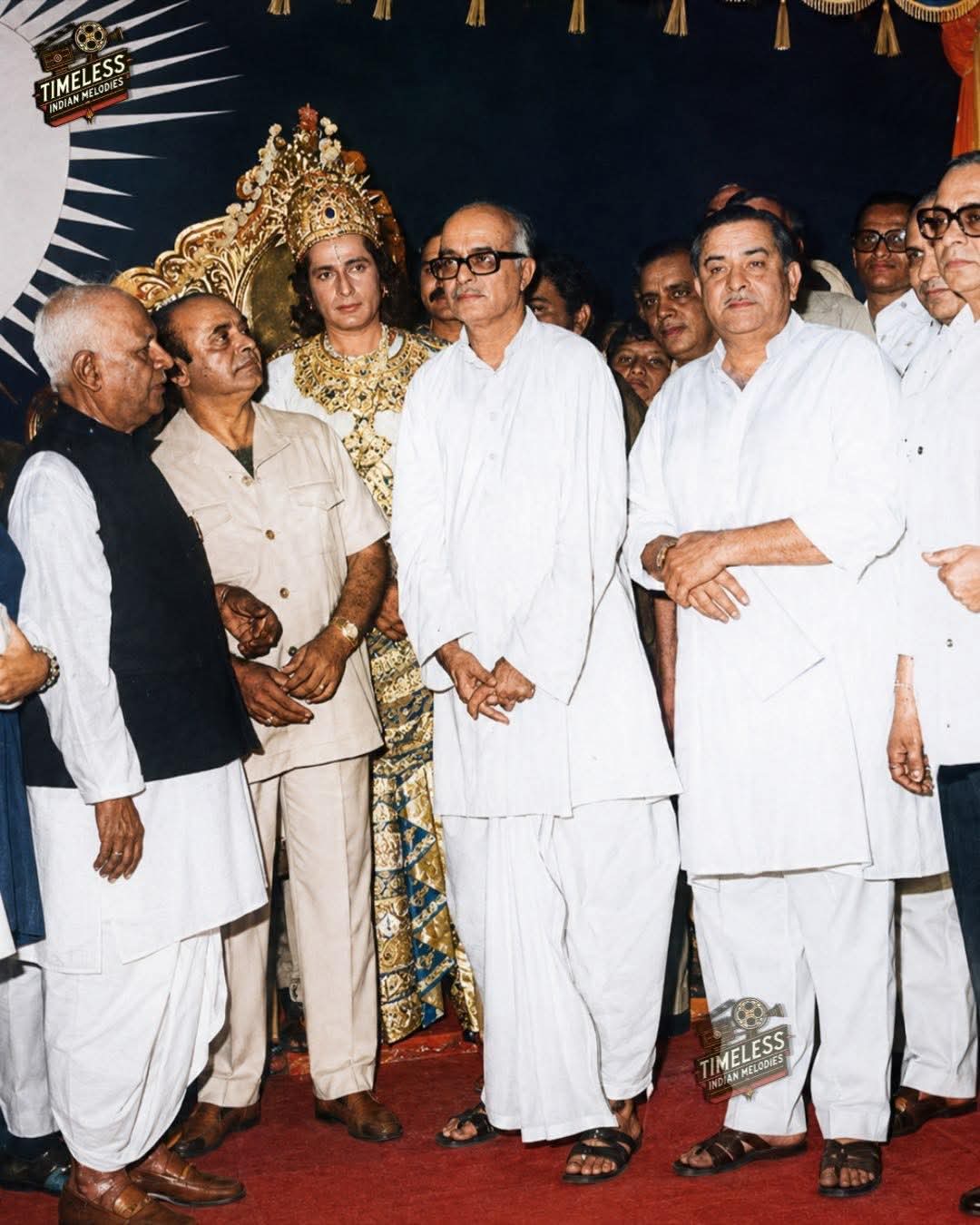
What makes the image so intensely vivid is that Shashi possessed the exact traits to play the divine charmer. With his signature boyish grin, cascading curls, and magnetic warmth, he naturally exuded the effortless charm associated with Krishna.
The tragic twist is that regardless the blockbuster cast, cosmic alignment had other plans, and the movie was shelved before full production could begin. It remained one of the greatest lifelong regrets of the evergreen actor’s career.
Ramanand Sagar’s Yogeshwar Krishna is one of the most magnificent “what if” stories in Hindi cinema. It perfectly captures the scale, ambition, and cinematic magic of 1970s Bollywood.
Shashi Kapoor as Lord Krishna truly would have been fascinating. His natural, effortless grace, soft-spoken charm, and twinkling, slightly mischievous eyes were practically tailor-made for the mythological charisma of Krishna.
Aside from Shashi Kapoor as the titular Krishna, the film boasted an astronomical ensemble that included Dharmendra, Vinod Khanna, Hema Malini, Amjad Khan, and Jeevan.
It was planned that a young Rishi Kapoor would have played the role of Abhimanyu.
Before he became one of India’s most prominent political figures, L.K. Advani wrote the screenplay and dialogues for the film.
The mahurat at Natraj Studios in Bombay around 1976–1977 was a massive, star-studded event. People overflowed the sets, and with Raj Kapoor present to bless the project, it felt like an old Bollywood dream before destiny intervened.
The film was unfortunately shelved, and Shashi Kapoor reportedly harbored a lifelong regret that he never got the chance to play the role. However, you can see how deeply drawn Ramanand Sagar was to spiritual storytelling by looking at his later masterwork, which went on to change Indian television forever.
A well-known anecdote recounted by Prem Sagar son of legendary filmmaker Ramanand Sagar detailing the unpredictable and glamorous nature of 1970s Bollywood.
In the mid-to-late 1970s, film “mahurats” (the auspicious opening ceremonies of a movie) were treated as grand promotional spectacles rather than just private prayers.
As Prem Sagar highlighted, a massive, big-budget mahurat around 1976 or 1977 drew colossal crowds, prominent industry elites, and extravagant sets.
Despite the immense hype, fanfare, and mythological grandeur generated for the cameras, the project was ultimately shelved and never completed.
The mid-70s was a volatile transitional period in Indian cinema. While mythological and romantic epics were traditionally popular, the industry was simultaneously being upended by gritty action thrillers (e.g., the era of the “Angry Young Man”). In fact, the Sagars themselves shifted focus during this exact window to release the successful action thriller Charas (1976). Fluctuating market trends, shifting distributor backing, or financial constraints were common reasons why heavily hyped mahurats from this decade never materialized into full feature films.
It is a profoundly cinematic thought.
Raj Kapoor’s presence bridges eras of Indian cinema the era of the grand, poetic dreamer passing the torch to another vision of storytelling, only for reality to step in and alter that trajectory altogether.
It captures the beautiful melancholy of the industry – the Showman blessing a beginning, entirely unaware of the dramatic twists destiny had waiting in the wings.
News Edit KV Raman